
How to Reduce Your Electricity Bill: 15 Practical Ways to Lower Energy Costs
Discover practical ways to reduce your electricity bill, lower energy consumption, improve appliance efficiency, and save money every month.
Calcifyai Team
Expert calculators & financial tools
Electricity prices continue to rise, making energy efficiency more important than ever. Whether you're a homeowner, renter, or business owner, reducing electricity usage can lead to significant savings throughout the year.
The good news is that lowering your electricity bill doesn't always require expensive upgrades. Small changes in daily habits, appliance usage, and home efficiency can make a noticeable difference.
In this guide, you'll learn practical strategies to reduce energy consumption, lower monthly utility bills, and improve overall household efficiency.
Why Is Your Electricity Bill High?
Before reducing energy costs, it's important to understand what causes high electricity consumption.
Common reasons include:
Air conditioners running for long hours
Old appliances
Poor insulation
Inefficient lighting
Standby power consumption
Electric water heaters
Outdated refrigerators
Seasonal weather changes
Many households discover that a few major appliances account for most of their electricity usage.
If you're unsure where your energy is being used, reviewing your monthly household power consumption patterns is a great place to start.
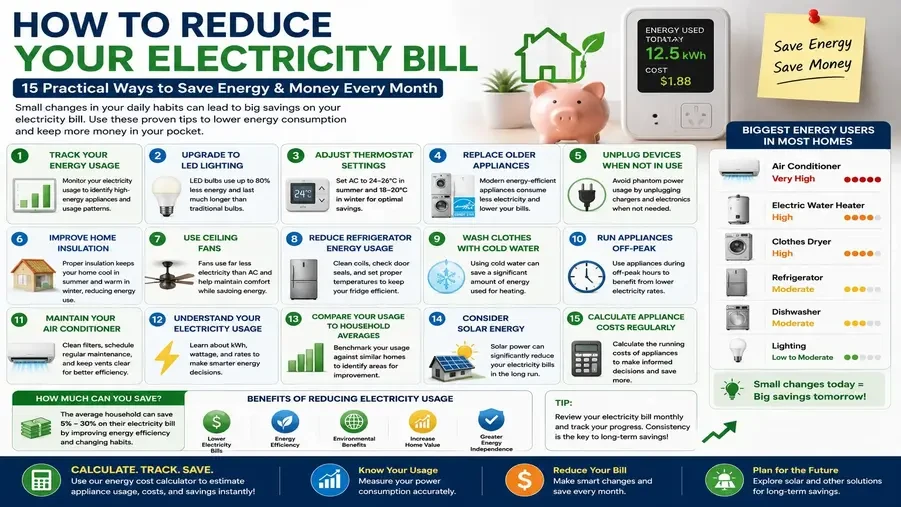
1. Track Your Energy Usage
The first step toward lowering your electricity bill is understanding how much energy you use.
Monitoring electricity consumption helps identify:
High-energy appliances
Usage trends
Seasonal spikes
Unexpected increases
Many homeowners use an electricity usage tracking calculator to estimate appliance consumption and identify opportunities for savings.
2. Upgrade to LED Lighting
Traditional incandescent bulbs consume significantly more electricity than LED alternatives.
Benefits of LED bulbs:
Lower energy consumption
Longer lifespan
Reduced replacement costs
Less heat production
Switching an entire household to LED lighting can reduce annual electricity usage considerably.
3. Adjust Thermostat Settings
Heating and cooling systems often account for the largest portion of household energy bills.
Even small temperature adjustments can reduce electricity consumption.
Recommended settings:
Summer: 24–26°C (75–78°F)
Winter: 18–20°C (65–68°F)
If cooling costs are a concern, read our guide on air conditioner operating expenses and energy usage.
4. Replace Older Appliances
Older appliances are often far less efficient than modern models.
Consider upgrading:
Refrigerators
Washing machines
Dishwashers
Air conditioners
Water heaters
New ENERGY STAR-certified appliances can dramatically reduce electricity consumption.
Our article on appliance efficiency ratings explained simply can help you compare energy-efficient models.
5. Unplug Devices When Not in Use
Many electronics continue consuming power even when turned off.
Examples include:
Chargers
Gaming consoles
Televisions
Computers
Smart home devices
This hidden energy use is often called phantom power or standby consumption.
6. Improve Home Insulation
Poor insulation forces heating and cooling systems to work harder.
Common improvements include:
Attic insulation
Window sealing
Door weather stripping
Wall insulation
Better insulation often provides one of the highest returns on investment for energy savings.
7. Use Ceiling Fans
Ceiling fans consume significantly less electricity than air conditioners.
They improve airflow and make rooms feel cooler without dramatically increasing energy consumption.
8. Reduce Refrigerator Energy Usage
Refrigerators operate continuously, making efficiency important.
Simple improvements include:
Cleaning condenser coils
Checking door seals
Maintaining proper temperatures
Avoiding overfilling
Our guide on refrigerator electricity costs and usage habits explains these savings opportunities in detail.
9. Wash Clothes With Cold Water
Water heating accounts for a large portion of laundry energy costs.
Using cold water:
Reduces electricity consumption
Extends clothing lifespan
Produces similar cleaning results for many loads
10. Run Appliances During Off-Peak Hours
Some utility providers charge lower rates during off-peak periods.
Running appliances such as:
Dishwashers
Washing machines
Dryers
during cheaper rate periods can lower monthly electricity bills.
11. Monitor Air Conditioner Efficiency
Air conditioning is one of the largest energy expenses in most homes.
Ways to improve efficiency:
Clean air filters
Schedule maintenance
Use programmable thermostats
Keep vents unobstructed
12. Understand Your Electricity Usage
Many homeowners don't realize how much electricity appliances consume.
Understanding concepts such as:
Kilowatt-hours
Appliance wattage
Utility rates
can make energy management easier.
Our beginner-friendly guide on understanding electricity measured in kWh explains these concepts clearly.
13. Compare Your Usage to Household Averages
Comparing your consumption to similar homes helps determine whether you're using excessive electricity.
If your usage is significantly higher than average, further investigation may be worthwhile.
See our article on typical residential electricity consumption statistics for benchmarking information.
14. Consider Solar Energy
Solar panels can offset a substantial portion of household electricity consumption.
Benefits include:
Lower utility bills
Energy independence
Long-term savings
Environmental benefits
Before investing, explore our solar panel savings and ROI guide to estimate potential benefits.
15. Calculate Appliance Costs Regularly
The most effective way to reduce electricity bills is to understand exactly how much each appliance costs to operate.
By tracking appliance energy consumption, you can make informed decisions about:
Usage habits
Appliance upgrades
Energy-saving investments
An energy cost estimation tool can simplify this process significantly.
Which Appliances Increase Electricity Bills the Most?
In most households, the largest energy users are:
Appliance | Typical Electricity Usage |
Air Conditioner | Very High |
Electric Water Heater | High |
Clothes Dryer | High |
Refrigerator | Moderate |
Dishwasher | Moderate |
Lighting | Low to Moderate |
Understanding which appliances consume the most energy helps prioritize efficiency improvements.
You can compare appliance usage in our household appliance electricity comparison chart.
Frequently Asked Questions
What is the fastest way to lower my electricity bill?
Reducing air conditioning usage, upgrading lighting, and eliminating standby power are among the quickest ways to save.
Which appliance uses the most electricity?
Air conditioners typically consume more electricity than most household appliances.
Does unplugging devices save money?
Yes. Eliminating standby power can reduce electricity consumption over time.
How can I track appliance electricity costs?
Use appliance wattage, operating hours, and utility rates or an energy consumption calculator for home appliances.
Is solar worth it for reducing electricity bills?
In many locations, solar energy can significantly reduce long-term electricity costs.
Final Thoughts
Reducing your electricity bill doesn't require drastic lifestyle changes. By improving appliance efficiency, adjusting energy habits, and understanding where electricity is being used, most households can lower monthly utility costs significantly.
Whether you're trying to cut cooling expenses, improve appliance efficiency, or evaluate solar energy, monitoring electricity consumption is the foundation of smart energy management. Use our home energy usage calculator to identify high-cost appliances and discover opportunities to save money every month.
Disclaimer
The information provided in this article is for educational and informational purposes only. It should not be considered as professional financial, medical, or legal advice. Always consult with qualified professionals for specific guidance related to your situation.
Popular Calculators
Explore our most-used free calculators for finance, health, and everyday needs.