
Protein Intake for Muscle Growth and Fat Loss
Understand daily protein intake, protein intake by body weight, and the best high-protein foods to support muscle growth, recovery, metabolism, and overall health.
Calcifyai Team
Expert calculators & financial tools
A lot of people have questions about how much protein they should consume on a daily basis in order to support their fitness goals. For example, there are millions of people trying to find out how to calculate their daily protein intake by searching for formulas like: daily protein intake formula or protein calculator. In order to answer questions that will help them with their nutrition needs, people need to understand what factors determine an ideal amount of protein for themselves; specifically, body weight, activity level, fitness goals, and overall lifestyle. There are many reasons why understanding proper protein intake is crucial for success if one’s goal is to gain muscle, lose fat or maintain a healthy body.
What Is Protein?
Protein can be defined as an essential nutrient that is made up of amino acids. The functions of protein are to:
Build up muscle
Repair muscles after exercise
Support metabolism
Help recover from workouts
Support the health of skin, hair, and nails
Support the immune system
Some foods high in protein include:
Eggs
Chicken
Fish
Dairy
Beans and legumes
Nuts and seeds
Eating a balanced diet sufficiently including protein provides support for fitness and overall health.
Protein Intake by Weight Formula
The most common method for calculating protein needs is based on body weight.
A general guideline is:
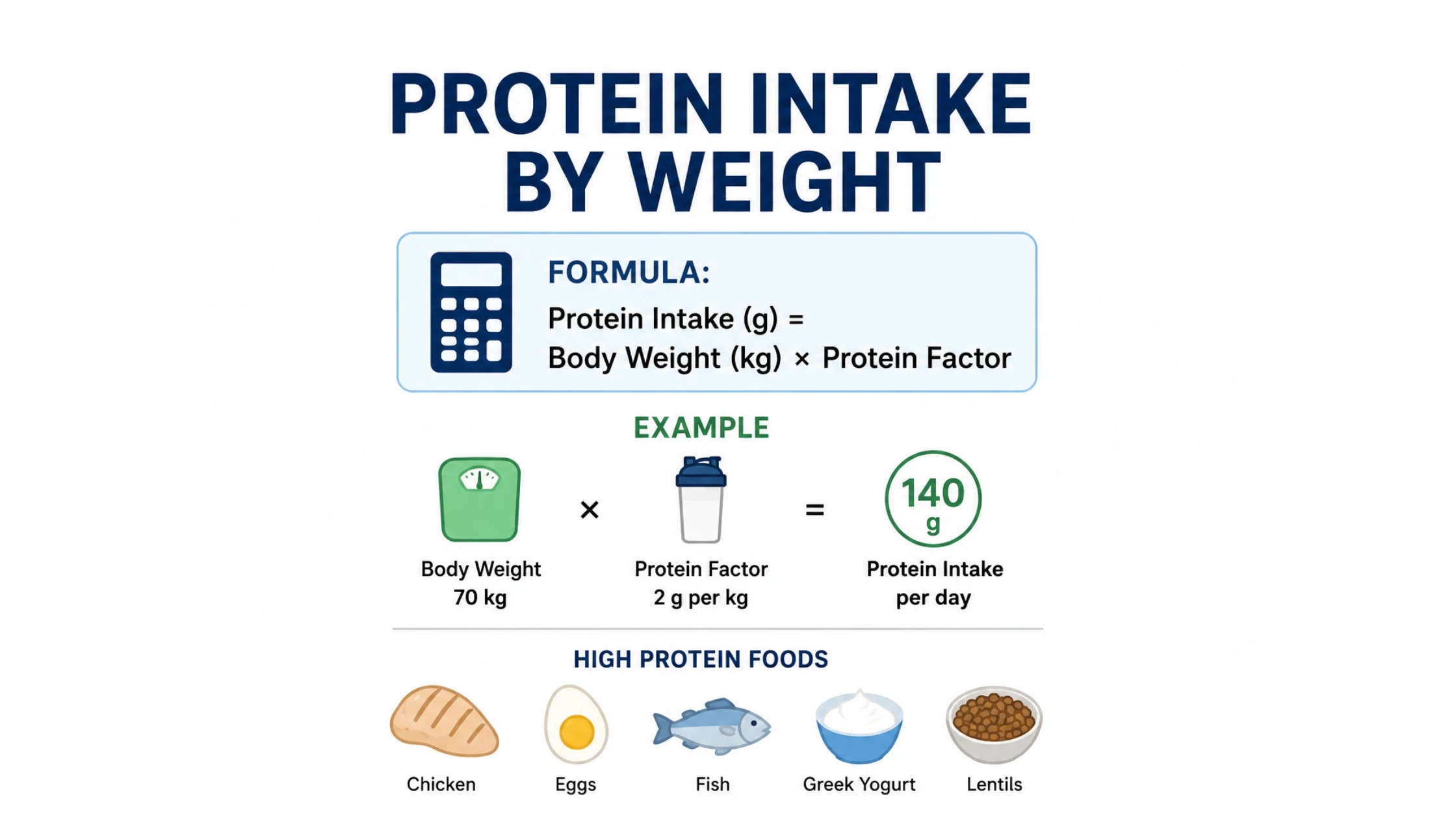
Protein Intake (g)=Body Weight (kg)×Protein Factor\text{Protein Intake (g)} = \text{Body Weight (kg)} \times \text{Protein Factor}Protein Intake (g)=Body Weight (kg)×Protein Factor
Recommended Protein Intake:
Goal Protein Per kg
Sedentary Adults 0.8g
Active Individuals 1.2–1.6g
Muscle Gain 1.6–2.2g
Weight Loss 1.6–2.0g
For example:
Weight = 70 kg
Goal = Muscle gain
Protein factor = 2g/kg
Daily protein intake = 140g protein per day.
Many people use a protein intake calculator to estimate their daily protein needs quickly.
Why Protein Intake Matters
Eating sufficiently high amounts of protein helps with:
Building lean muscle
Recovering from workouts
Reducing muscle atrophy during weight loss
Increasing satiety and controlling appetite
Supporting metabolic processes
These benefits of adequate protein consumption are what make diets high in protein popular among athletes, gym-goers, and anyone looking to lose weight.
Protein Consumption for Gains in Muscle
A person who is working toward building muscle will often have a need for increased protein when doing resistance-type movements since these types of exercise will cause the body to break down muscle tissue.
By combining an increase in protein, with strength training, adequate sleep, and nutrition, a person's ability to recover from an exercise bout and grow muscle will be enhanced.
For this reason, terms such as protein for muscle gain and daily protein intake calculator rank high in search engine requests.
Highest Protein Foods To Eat
Some of the highest protein food items include:
Chicken breast
Eggs
Greek yogurt
Fish
Lean meats
Cottage cheese
Soy products (such as tofu)
Lentils
Protein shakes
If you include a protein source at every meal, then you will have a consistent protein intake throughout the course of a day.
Advantages of Using a Protein Calculator
A protein calculator can assist individuals with:
Estimating the protein requirements for their daily diet
Following an effective weight loss programme
Establishing a muscle-growing strategy
Tracking your nutrition goals
Creating balanced meal plans
By assisting with the nutrition planning process, a protein calculator can add simplicity to your nutrition planning and can provide increased accuracy in your dietary planning.
Strategies For Gaining More Protein
There are a number of ways to optimize your protein intake:
Spread your protein throughout the meals you eat during the day
Combine your protein with healthy carbohydrates and fats
Continue to drink plenty of fluids
Use whole food protein sources
Adjust your protein intake based on your level of physical activity
Consistency is key when it comes to obtaining long-term results with fitness and health.
Conclusion
How much protein you consume relative to your bodyweight is critical to achieving good health, muscle growth, recovery from exercise and weight control. Protein intake is an important factor when looking to achieve fitness improvement, fat loss and/or maintaining a healthy lifestyle.
A protein intake calculator can help determine daily protein intake and allow you to choose foods high in protein; this will help you reach your nutrition and fitness goals more effectively.
Disclaimer
The information provided in this article is for educational and informational purposes only. It should not be considered as professional financial, medical, or legal advice. Always consult with qualified professionals for specific guidance related to your situation.
Popular Calculators
Explore our most-used free calculators for finance, health, and everyday needs.