
How the Weight Watchers Point System Works
Learn how the Weight Watchers Point System works, how Points are calculated, why ZeroPoint foods matter, and how to use the system for healthy weight management.
Calcifyai Team
Expert calculators & financial tools
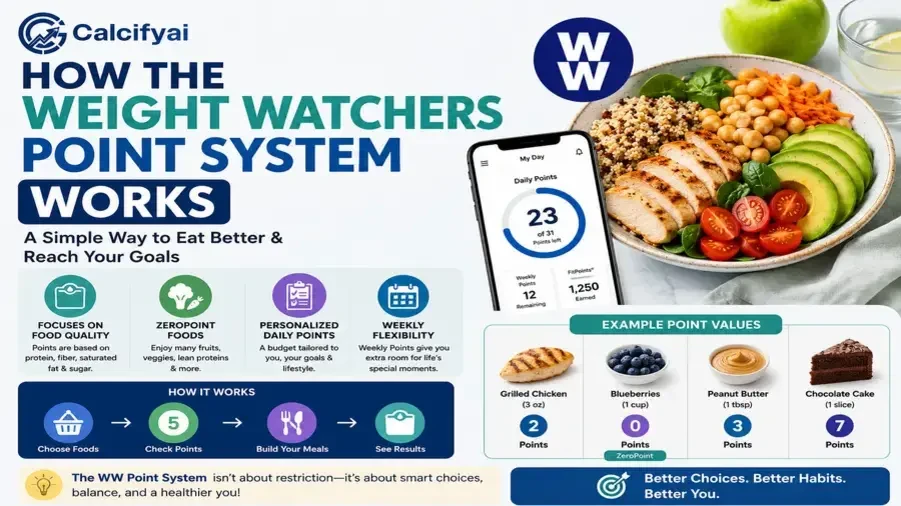
Losing weight isn't just about counting calories anymore. The Weight Watchers Point System (now known as the WW Points® Program) simplifies healthy eating by assigning foods a point value instead of asking you to track every calorie.
Rather than focusing only on calories, the system considers nutrients like protein, fiber, saturated fat, and added sugar to encourage healthier food choices while giving you flexibility in your daily meals.
Whether you're new to Weight Watchers or simply curious about how the program works, this guide explains the basics of the Point System, how foods receive their Points, and how you can use it to build healthier eating habits.
Want to estimate your daily calorie needs before starting a weight-loss journey? Try our Calorie Calculator for a personalized estimate.
What Is the Weight Watchers Point System?
The Weight Watchers Point System is a nutrition-based approach that assigns every food and beverage a numerical Point value.
Instead of counting calories alone, the program encourages eating foods that are more filling and nutrient-dense.
Generally:
Foods higher in protein receive fewer Points.
Foods high in fiber are rewarded with lower Points.
Foods containing added sugars or saturated fats usually have higher Points.
Many fruits and vegetables are ZeroPoint foods.
This approach helps members make healthier food choices without completely eliminating their favorite meals.
How Are Weight Watchers Points Calculated?
Although WW uses a proprietary formula, Points are generally influenced by several nutritional factors.
Foods with:
Higher protein → Lower Points
Higher fiber → Lower Points
Higher saturated fat → Higher Points
Higher added sugar → Higher Points
The goal is to encourage foods that provide better nutrition and keep you feeling full longer.
What Are Daily Points?
Every member receives a personalized Daily Points Budget.
The number depends on factors such as:
Age
Height
Weight
Sex
Activity level
Weight-loss goals
Each day, you can spend your Points however you like while staying within your budget.
What Are Weekly Points?
In addition to Daily Points, Weight Watchers also provides Weekly Points.
These offer extra flexibility for:
Dining out
Special occasions
Holidays
Weekend meals
Unused Daily Points may also roll over (depending on your plan), giving you additional flexibility throughout the week.
What Are ZeroPoint Foods?
One of the biggest features of the Weight Watchers program is its list of ZeroPoint Foods.
These foods generally don't require tracking because they are nutritious and less likely to be overeaten.
Examples often include:
Fresh fruits
Most vegetables
Skinless chicken breast
Eggs (depending on your plan)
Beans and legumes
Tofu
Fish
ZeroPoint foods make meal planning easier while encouraging balanced nutrition.
Why Doesn't the Program Only Count Calories?
Two foods may contain the same number of calories but offer very different nutritional value.
For example:
A sugary snack and grilled chicken may have similar calories.
However, grilled chicken contains more protein and keeps you full longer.
The Points system encourages healthier choices rather than focusing only on calorie intake.
Benefits of the Weight Watchers Point System
Many people choose the WW Point System because it offers:
Flexible meal planning
Simple food tracking
Balanced nutrition
No completely forbidden foods
Personalized daily goals
Long-term healthy eating habits
Rather than promoting restrictive dieting, the system focuses on building sustainable habits.
Example of a Typical Day
Here's a simplified example:
Breakfast
Greek yogurt
Blueberries
Low Points
Lunch
Grilled chicken salad
Moderate Points
Snack
Apple
Zero or very low Points
Dinner
Salmon
Brown rice
Steamed vegetables
Balanced Point value
The exact Points vary depending on your personalized WW plan.
Tips for Using the Point System Successfully
To get the best results:
Prioritize lean proteins.
Fill your plate with vegetables.
Choose whole grains over refined grains.
Save Weekly Points for special occasions.
Plan meals in advance.
Stay physically active.
Consistency is often more important than perfection.
Use our BMI Calculator to monitor changes in your body weight alongside your nutrition goals.
Common Mistakes to Avoid
Many beginners make these mistakes:
Ignoring portion sizes.
Spending all Daily Points on processed foods.
Forgetting to track snacks.
Not eating enough protein.
Assuming ZeroPoint foods can be eaten without moderation.
The Point System works best when paired with balanced eating habits.
Weight Watchers Points vs Calorie Counting
Weight Watchers Points | Calorie Counting |
Focuses on food quality | Focuses mainly on calories |
Personalized Point budget | Daily calorie target |
Encourages protein and fiber | Doesn't consider nutrient quality |
Includes ZeroPoint foods | Every calorie is counted |
Easier for many people to maintain | Can require more detailed tracking |
Both methods can support weight loss, but many people prefer the flexibility of the Points system.
Is the Weight Watchers Point System Effective?
Research and user experience suggest that structured eating plans can help many people lose weight when followed consistently.
The WW Point System encourages:
Healthier food choices
Better portion awareness
Sustainable habits
Long-term lifestyle changes
Success ultimately depends on consistency, balanced nutrition, and regular physical activity.
Frequently Asked Questions
Is the Weight Watchers Point System based on calories?
No. While calories are considered, the system also accounts for nutrients such as protein, fiber, saturated fat, and added sugar.
Are ZeroPoint foods really free?
ZeroPoint foods don't count toward your daily Points budget, but they should still be eaten in reasonable portions as part of a balanced diet.
Can I eat any food on Weight Watchers?
Yes. No foods are completely off-limits, but foods with higher Point values use more of your daily budget.
How are Daily Points determined?
Daily Points are personalized based on factors like age, weight, height, activity level, and health goals.
Do I still need exercise?
Yes. Regular physical activity complements healthy eating and supports overall wellness and weight management.
Conclusion
The Weight Watchers Point System simplifies healthy eating by focusing on food quality instead of calories alone. By assigning Point values based on nutritional content, the program encourages balanced meals, portion awareness, and sustainable habits without requiring you to eliminate your favorite foods.
Whether you're beginning a weight-loss journey or simply looking for a more flexible way to eat well, understanding how the Point System works can help you make informed choices and stay on track with your health goals.
Disclaimer
The information provided in this article is for educational and informational purposes only. It should not be considered as professional financial, medical, or legal advice. Always consult with qualified professionals for specific guidance related to your situation.
Popular Calculators
Explore our most-used free calculators for finance, health, and everyday needs.