
Mortgage Overpayment Calculator Guide: How Overpaying Your Mortgage Can Save Thousands
Learn how mortgage overpayments work, how much interest you can save, and how to pay off your mortgage years earlier using smart overpayment strategies.
Calcifyai Team
Expert calculators & financial tools
For many homeowners, a mortgage is the largest debt they'll ever have. While monthly payments may seem fixed, many lenders allow borrowers to make additional payments toward their mortgage balance.
These extra payments are known as mortgage overpayments.
Even small overpayments can reduce the total interest paid, shorten the mortgage term, and help you become mortgage-free sooner.
Whether you're looking to save money, reduce financial stress, or build equity faster, understanding mortgage overpayments can be a valuable part of your financial strategy.
A UK Mortgage Calculator can help you estimate how much time and interest you could save through regular overpayments.
What Is a Mortgage Overpayment?
A mortgage overpayment is any payment you make above your required monthly mortgage payment.
For example:
Required Monthly Payment = £1,200
Actual Payment = £1,300
Monthly Overpayment = £100
The additional £100 goes directly toward reducing your mortgage balance.
Because interest is calculated on the remaining balance, reducing that balance earlier often results in substantial long-term savings.
How Mortgage Overpayments Work
Every mortgage payment consists of:
Principal repayment
Interest charges
When you make an overpayment, more money goes toward reducing the principal balance.
As the outstanding balance decreases:
Future interest charges decrease
Mortgage term shortens
Total borrowing cost falls
This creates a compounding benefit over time.
Why Consider Mortgage Overpayments?
Many homeowners focus solely on making their required payments.
However, overpaying can provide several financial advantages.
Pay Off Your Mortgage Faster
One of the biggest benefits is reducing the length of your mortgage.
For example:
A 25-year mortgage could potentially be reduced by several years through consistent overpayments.
Save Thousands in Interest
Interest accumulates over decades.
Reducing the balance early means less interest is charged throughout the life of the loan.
Build Home Equity Faster
Overpayments increase your ownership stake in the property.
This may improve future remortgaging opportunities.
Improve Financial Security
Becoming mortgage-free sooner can provide greater financial flexibility and peace of mind.
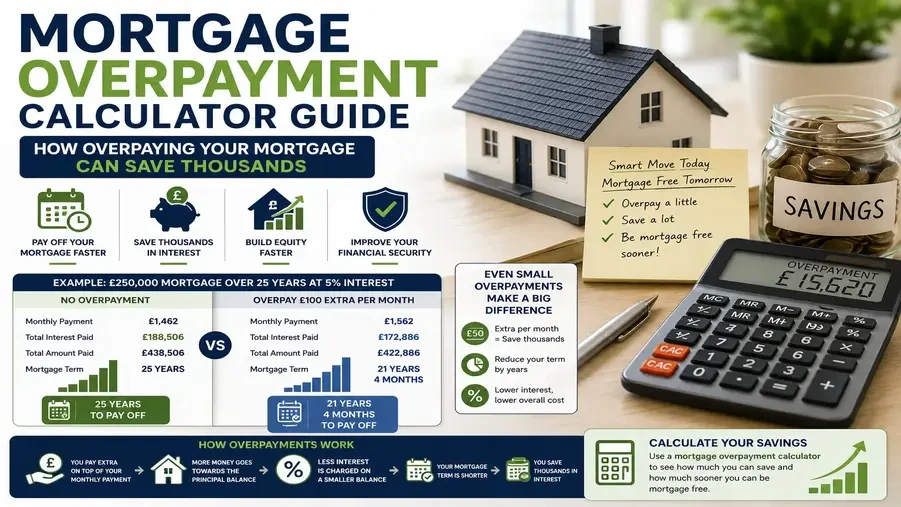
Example of Mortgage Overpayment Savings
Let's assume:
Mortgage Balance: £250,000
Interest Rate: 5%
Term: 25 Years
Monthly Payment: £1,462
Now add an extra £100 monthly overpayment.
Potential Results
Scenario | Standard Mortgage | With £100 Overpayment |
Monthly Payment | £1,462 | £1,562 |
Mortgage Term | 25 Years | Approximately 21–22 Years |
Interest Paid | Higher | Significantly Lower |
While exact savings vary, many homeowners save tens of thousands of pounds through consistent overpayments.
A mortgage savings estimator can help calculate your specific savings.
Regular vs Lump Sum Overpayments
There are generally two ways to overpay a mortgage.
Regular Monthly Overpayments
Adding a fixed amount to each monthly payment.
Example:
£50 extra per month
£100 extra per month
£200 extra per month
This approach is popular because it's predictable and easy to budget.
Lump Sum Overpayments
Making occasional larger payments.
Examples include:
Annual work bonus
Tax refund
Inheritance
Investment gains
Even a single lump sum payment can significantly reduce future interest costs.
How Much Should You Overpay?
There is no universal answer.
The best amount depends on:
Income
Savings goals
Emergency fund
Other debts
Investment opportunities
Many financial advisers recommend balancing mortgage overpayments with:
Retirement contributions
Emergency savings
Debt repayment
Investment goals
A home loan repayment planner can help model different scenarios before committing to an overpayment strategy.
Check Your Mortgage Overpayment Limits
Many mortgage lenders allow overpayments, but restrictions often apply.
Typical limits include:
Up to 10% of outstanding balance per year
Fixed annual overpayment allowance
Early repayment charge thresholds
Exceeding these limits may trigger fees.
Always review your mortgage agreement before making large overpayments.
When Mortgage Overpayments Make Sense
Mortgage overpayments may be beneficial if:
You Have High Mortgage Interest Rates
The higher your rate, the greater the potential savings.
You Have Emergency Savings
Ensure you maintain an emergency fund before making significant overpayments.
You Want to Become Mortgage-Free Earlier
Overpayments can dramatically shorten mortgage terms.
You Prefer Guaranteed Returns
Paying down debt provides a predictable financial benefit.
When Mortgage Overpayments May Not Be the Best Choice
Overpaying isn't always the optimal financial decision.
Consider alternatives if:
You Have High-Interest Consumer Debt
Credit cards often carry much higher interest rates than mortgages.
You Lack Emergency Savings
Liquidity is important for unexpected expenses.
Your Employer Offers Retirement Matching
Some retirement contributions may provide greater long-term value.
You Have Better Investment Opportunities
Depending on market conditions, investments may potentially generate higher returns.
Mortgage Overpayments vs Remortgaging
Some homeowners wonder whether they should overpay or remortgage.
Mortgage Overpayments
Reduce balance faster
Save interest
Shorten term
Remortgaging
Potentially secure lower interest rates
Change loan terms
Access home equity
Many homeowners use both strategies together.
You can learn more in our guide on Remortgaging Explained.
Common Mortgage Overpayment Mistakes
Overpaying Without Emergency Savings
Always maintain financial reserves.
Ignoring Early Repayment Charges
Check lender restrictions before making large payments.
Neglecting Other Financial Goals
Balance mortgage reduction with investing and retirement planning.
Not Calculating Potential Savings
Use a loan overpayment calculator to estimate benefits before committing additional funds.
How a Mortgage Overpayment Calculator Helps
A mortgage overpayment calculator allows homeowners to:
Estimate interest savings
Compare overpayment amounts
Calculate mortgage term reduction
Model lump-sum payments
Evaluate repayment strategies
Using a mortgage term reduction calculator can provide a clear picture of how extra payments impact your mortgage timeline.
Frequently Asked Questions
Can I overpay my mortgage every month?
Yes. Most lenders allow regular overpayments, although limits may apply.
Do mortgage overpayments reduce monthly payments?
Usually, overpayments reduce the mortgage balance and term rather than monthly payments.
Are mortgage overpayments worth it?
For many homeowners, yes. Overpayments can significantly reduce interest costs and shorten the mortgage term.
Can I make a lump sum mortgage payment?
Many lenders allow lump-sum payments, but check for overpayment limits or early repayment charges.
How much interest can I save?
Savings vary depending on mortgage balance, rate, term, and overpayment amount.
Final Thoughts
Mortgage overpayments can be one of the most effective ways to reduce borrowing costs and become mortgage-free sooner.
Even relatively small extra payments can save thousands of pounds in interest and shorten your mortgage by several years.
Before making overpayments, review your lender's rules, assess your overall financial situation, and calculate potential savings. With the right strategy, mortgage overpayments can become a powerful tool for long-term financial freedom.
Disclaimer
The information provided in this article is for educational and informational purposes only. It should not be considered as professional financial, medical, or legal advice. Always consult with qualified professionals for specific guidance related to your situation.
Popular Calculators
Explore our most-used free calculators for finance, health, and everyday needs.