
Remortgaging Explained UK | Benefits, Costs & When to Remortgage
Learn how remortgaging works in the UK, when it makes sense, potential costs, and how switching mortgage deals could save you money.
Calcifyai Team
Expert calculators & financial tools
Many homeowners assume that once they get a mortgage, they simply continue making payments until the loan is fully repaid.
In reality, millions of UK homeowners remortgage throughout their mortgage journey.
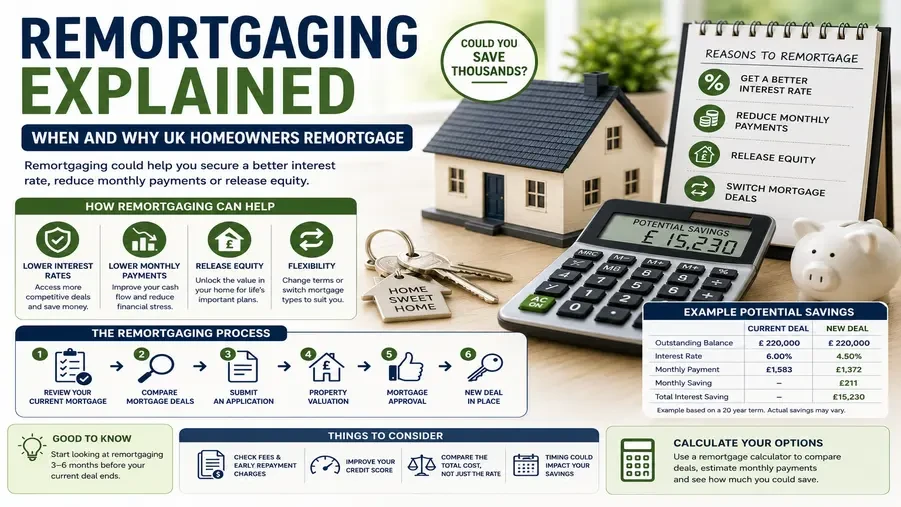
Remortgaging can help borrowers secure lower interest rates, reduce monthly payments, release equity, or switch to a mortgage product that better suits their needs.
If your current mortgage deal is approaching its end date, understanding how remortgaging works could potentially save you thousands of pounds.
Before switching lenders or mortgage products, many homeowners use a remortgage calculator to compare costs and estimate potential savings.
In this guide, we'll explain everything you need to know about remortgaging in the UK.
What Is Remortgaging?
Remortgaging means replacing your existing mortgage with a new mortgage.
This can involve:
Switching to a new lender
Moving to a new mortgage product with your existing lender
Borrowing additional funds
Changing mortgage terms
The property remains the same, but the mortgage agreement changes.
Why Do People Remortgage?
There are several reasons homeowners choose to remortgage.
Secure a Better Interest Rate
One of the most common reasons is to access a lower interest rate.
Even a small reduction in interest rates can create significant savings over time.
A Mortgage Calculator UK can help estimate how much a lower rate may reduce monthly payments.
Reduce Monthly Mortgage Payments
Some homeowners remortgage to spread repayments over a longer period.
This can lower monthly costs and improve cash flow.
Release Equity
As property values increase and mortgage balances decrease, homeowners build equity.
Remortgaging can allow access to some of that equity for:
Home improvements
Debt consolidation
Major purchases
Investment opportunities
Switch Mortgage Types
Borrowers often switch between fixed and variable-rate products.
If you're unsure which option is best, our mortgage rate comparison guide on fixed versus variable mortgages explains the differences in detail.
When Should You Consider Remortgaging?
Your Fixed Rate Is Ending
Many homeowners remortgage when their initial fixed-rate period ends.
This is often the best time to shop around for a new deal.
Interest Rates Have Fallen
If market rates have decreased since you took out your mortgage, remortgaging may reduce borrowing costs.
Your Property Value Has Increased
Higher property values can improve your Loan-to-Value ratio (LTV).
This may unlock access to better mortgage products.
Your Financial Situation Has Improved
Higher income, lower debts, and improved credit scores may help you qualify for more competitive rates.
A mortgage affordability assessment can help determine your eligibility for new mortgage products.
How Does Remortgaging Work?
The process is similar to applying for a mortgage.
Step 1: Review Your Current Mortgage
Check:
Interest rate
Remaining balance
Early repayment charges
Product end date
Step 2: Compare Mortgage Deals
Research available products from lenders and brokers.
Many homeowners use a mortgage switch calculator to compare repayment scenarios.
Step 3: Check Your Credit Profile
Lenders will review your creditworthiness before approving a new mortgage.
Step 4: Submit an Application
You'll typically provide:
Proof of income
Bank statements
Identification documents
Property information
Step 5: Property Valuation
The lender may conduct a valuation to confirm the property's current market value.
Step 6: Mortgage Approval
Once approved, your new mortgage replaces the old one.
How Much Could Remortgaging Save?
Consider this example:
Outstanding Mortgage: £220,000
Remaining Term: 20 Years
Current Rate: 6%
New Rate: 4.5%
Even a relatively small rate reduction could lower monthly payments significantly and reduce total interest costs.
A refinance savings calculator can help estimate potential savings based on your own mortgage details.
Costs Associated With Remortgaging
While remortgaging can save money, costs may apply.
Arrangement Fees
Some mortgage products charge setup fees.
Valuation Fees
Lenders may require a property valuation.
Legal Fees
Solicitor fees may apply depending on the lender and mortgage product.
Early Repayment Charges
These fees can be substantial if you leave a mortgage deal early.
Always calculate total costs before switching.
What Is Loan-to-Value (LTV)?
Loan-to-Value measures the percentage of the property's value covered by the mortgage.
Example
Property Value: £300,000
Mortgage Balance: £225,000
LTV = 75%
Lower LTV ratios often qualify for better mortgage rates.
For a deeper explanation of deposits and LTV, see our guide on home deposit requirements.
Should You Remortgage or Overpay Your Mortgage?
This depends on your goals.
Remortgaging May Be Better If:
Better rates are available
You want lower monthly payments
You need to release equity
Overpaying May Be Better If:
Your rate is already competitive
You want to reduce debt faster
You want to save on interest
Our guide on mortgage overpayment strategy explains how additional payments can shorten your mortgage term.
Common Remortgaging Mistakes
Waiting Too Long
Many homeowners miss competitive rates by delaying their search.
Ignoring Fees
Always compare total borrowing costs rather than focusing solely on interest rates.
Not Checking Credit Scores
Poor credit can affect mortgage eligibility.
Automatically Accepting Existing Lender Offers
Shopping around often uncovers better deals.
Remortgaging Tips for Homeowners
Start Early
Begin researching options three to six months before your current deal expires.
Improve Your Credit Score
Better credit often results in better rates.
Reduce Existing Debt
Lower debt levels can improve affordability.
Compare Multiple Lenders
Never assume your current lender offers the best deal.
Use Mortgage Tools
A mortgage deal comparison tool can help compare repayment scenarios and identify potential savings opportunities.
Frequently Asked Questions
How often can I remortgage?
There is no strict limit, although most homeowners remortgage when their mortgage deal ends.
Is remortgaging the same as refinancing?
Yes. Remortgaging is the UK term commonly used for mortgage refinancing.
Can I remortgage with bad credit?
Possibly, although available products and interest rates may be more limited.
Do I need a deposit to remortgage?
No new deposit is usually required when remortgaging your existing property.
Can remortgaging save money?
Yes. Securing a lower interest rate can significantly reduce monthly payments and total interest costs.
Final Thoughts
Remortgaging can be a powerful financial tool for reducing borrowing costs, accessing equity, and securing better mortgage terms.
Whether you're approaching the end of a fixed-rate deal or simply exploring ways to lower monthly payments, comparing mortgage options regularly can lead to substantial savings.
Before making a decision, evaluate your current mortgage, compare available deals, and calculate the total costs involved. With the right strategy, remortgaging could help you improve your financial position and achieve your long-term property goals.
Disclaimer
The information provided in this article is for educational and informational purposes only. It should not be considered as professional financial, medical, or legal advice. Always consult with qualified professionals for specific guidance related to your situation.
Popular Calculators
Explore our most-used free calculators for finance, health, and everyday needs.